> For the complete documentation index, see [llms.txt](https://vaansun.gitbook.io/elk-old-version/llms.txt). Markdown versions of documentation pages are available by appending `.md` to page URLs; this page is available as [Markdown](https://vaansun.gitbook.io/elk-old-version/kibana/v4/plugin/vis-develop.md).
# 可视化开发示例
上一节,我们看到了一个完整的 Kibana4 插件的官方用例。一般来说,我们不太会需要自己从头到尾写一个 angular app 出来。最常见的情况,应该是在 Kibana 功能的基础上做一定的二次开发和扩展。其中,可视化效果应该是重中之重。本节,以一个红绿灯效果,演示如何开发一个 Kibana4 可视化插件。
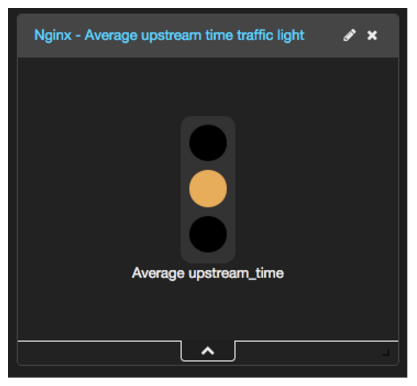
## 插件目录生成
Kibana 开发组提供了一个简单的工具,辅助我们生成一个 Kibana4 插件的目录结构:
```
npm install -g yo
npm install -g generator-kibana-plugin
mkdir traffic_light_vis
cd traffic_light_vis
yo kibana-plugin
```
但是这个是针对完整的 app 扩展的,很多目录对于可视化插件来说,并没有用。所以,我们可以自己手动创建目录:
```
mkdir -p traffic_light_vis/public
cd traffic_light_vis
touch index.js package.json
cd public
touch traffic_light_vis.html traffic_light_vis.js traffic_light_vis.less traffic_light_vis_controller.js traffic_light_vis_params.html
```
其中 `index.js` 内容如下:
```javascript
'use strict';
module.exports = function (kibana) {
return new kibana.Plugin({
uiExports: {
visTypes: ['plugins/traffic_light_vis/traffic_light_vis']
}
});
};
```
`package.json` 内容如下:
```javascript
{
"name": "traffic_light_vis",
"version": "0.1.0",
"description": "An awesome Kibana plugin for red/yellow/green status visualize"
}
```
这两个基础文件格式都比较固定,除了改个名就基本 OK 了。
然后我们看最关键的可视化对象定义 `public/traffic_light_vis.js` 内容:
```javascript
define(function (require) {
// 加载样式表
require('plugins/traffic_light_vis/traffic_light_vis.less');
// 加载控制器程序
require('plugins/traffic_light_vis/traffic_light_vis_controller');
// 注册到 vis_types
require('ui/registry/vis_types').register(TrafficLightVisProvider);
function TrafficLightVisProvider(Private) {
// TemplateVisType 基类,适用于基础的 metric 和数据表格式的可视化定义。实际上,Kibana4 的 metric_vis 和 table_vis 就继承自这个,
// Kibana4 还有另一个基类叫 VisLibVisType,其他使用 D3.js 做可视化的,继承这个。
var TemplateVisType = Private(require('ui/template_vis_type/TemplateVisType'));
var Schemas = Private(require('ui/Vis/Schemas'));
// 模板化的 visType 对象定义,用来配置和展示
return new TemplateVisType({
name: 'traffic_light',
// 显示在 visualize 选择列表里的名称,描述,小图标
title: 'Traffic Light',
description: 'Great for one-glance status readings, the traffic light visualization expresses in green / yellow / red the position of a single value in relation to low and high thresholds.',
icon: 'fa-car',
// 可视化效果模板页面
template: require('plugins/traffic_light_vis/traffic_light_vis.html'),
params: {
defaults: {
fontSize: 60
},
// 编辑参数的页面
editor: require('plugins/traffic_light_vis/traffic_light_vis_params.html')
},
// 在编辑页面上可以选择的 aggregation 类型。
schemas: new Schemas([
{
group: 'metrics',
name: 'metric',
title: 'Metric',
min: 1,
defaults: [
{ type: 'count', schema: 'metric' }
]
}
])
});
}
// export the provider so that the visType can be required with Private()
return TrafficLightVisProvider;
});
```
然后就是可视化效果的模板页面了,`traffic_light_vis.html` 毫无疑问也是一个 angular 风格的:
```markup
```
这里可以看到:
1. 把 div 绑定到了 `TrafficLightVisController` 控制器上,这个也是之前在 js 里已经加载过的。
2. 通过 `ng-repeat` 循环展示不同的 metric,也就是说模板渲染的时候,收到的是一个 `metrics` 数组。这个来源当然是在控制器里。
3. 然后具体的数据判断,即什么灯亮什么灯灭,通过了 `vis.params.*` 的运算判断。这些变量当然是在编辑页面里设置的。
所以下一步看编辑页面 `traffic_light_vis_params.html`:
```markup
```
内容很简单,就是通过 `ng-model` 设置绑定变量,跟之前 HTML 里的联动。
最后一步,看控制器 `traffic_light_vis_controller.js`:
```javascript
define(function (require) {
var module = require('ui/modules').get('kibana/traffic_light_vis', ['kibana']);
module.controller('TrafficLightVisController', function ($scope, Private) {
var tabifyAggResponse = Private(require('ui/agg_response/tabify/tabify'));
var metrics = $scope.metrics = [];
$scope.processTableGroups = function (tableGroups) {
tableGroups.tables.forEach(function (table) {
table.columns.forEach(function (column, i) {
metrics.push({
label: column.title,
value: table.rows[0][i]
});
});
});
};
$scope.$watch('esResponse', function (resp) {
if (resp) {
metrics.length = 0;
$scope.processTableGroups(tabifyAggResponse($scope.vis, resp));
}
});
});
});
```
要点在:
1. `$scope.$watch('esResponse', function(resp){})` 监听整个页面的请求响应,在有新数据过来的时候更新页面效果;
2. `agg_response/tabify/tabify` 把响应结果转换成二维表格形式。
最后加上一段样式表,这里就不贴了,见:。
本节介绍的示例,出自 logz.io 官方博客和对应的 github 开源项目。logz.io 是基于 Kibana4.1 写的插件。我这里修正成了基于最新 Kibana4.3 的实现。